In today’s hyper-connected digital landscape, capturing a moment is only half the story—sharing it is where the real magic happens. From vacation snapshots to professional photography portfolios, image sharing apps have become the invisible bridges that connect our visual experiences with the world. But what exactly are these platforms, and what happens behind the screens when you tap “upload”? Whether you’re a casual smartphone photographer, a creative professional, or simply curious about the technology powering your favorite social feeds, this guide breaks down what image sharing apps are and how they actually work.
What Is an Image Sharing App?
At its core, an image sharing app is a digital platform designed to upload, store, organize, and distribute visual content across devices and networks. While early iterations functioned primarily as cloud-based photo albums, modern image sharing apps have evolved into multifaceted ecosystems. They blend social networking, cloud storage, content discovery, and collaborative tools into a single, streamlined interface.
Popular examples range from mainstream platforms like Instagram, Pinterest, and Flickr to specialized services like Unsplash, VSCO, and even workplace tools like Slack or Google Photos. Despite their varied audiences and purposes, they all share a common foundation: making visual content accessible, searchable, and easily distributable to a chosen audience, whether that’s the entire internet or a single trusted contact.
How Does It Work? The Behind-the-Scenes Flow
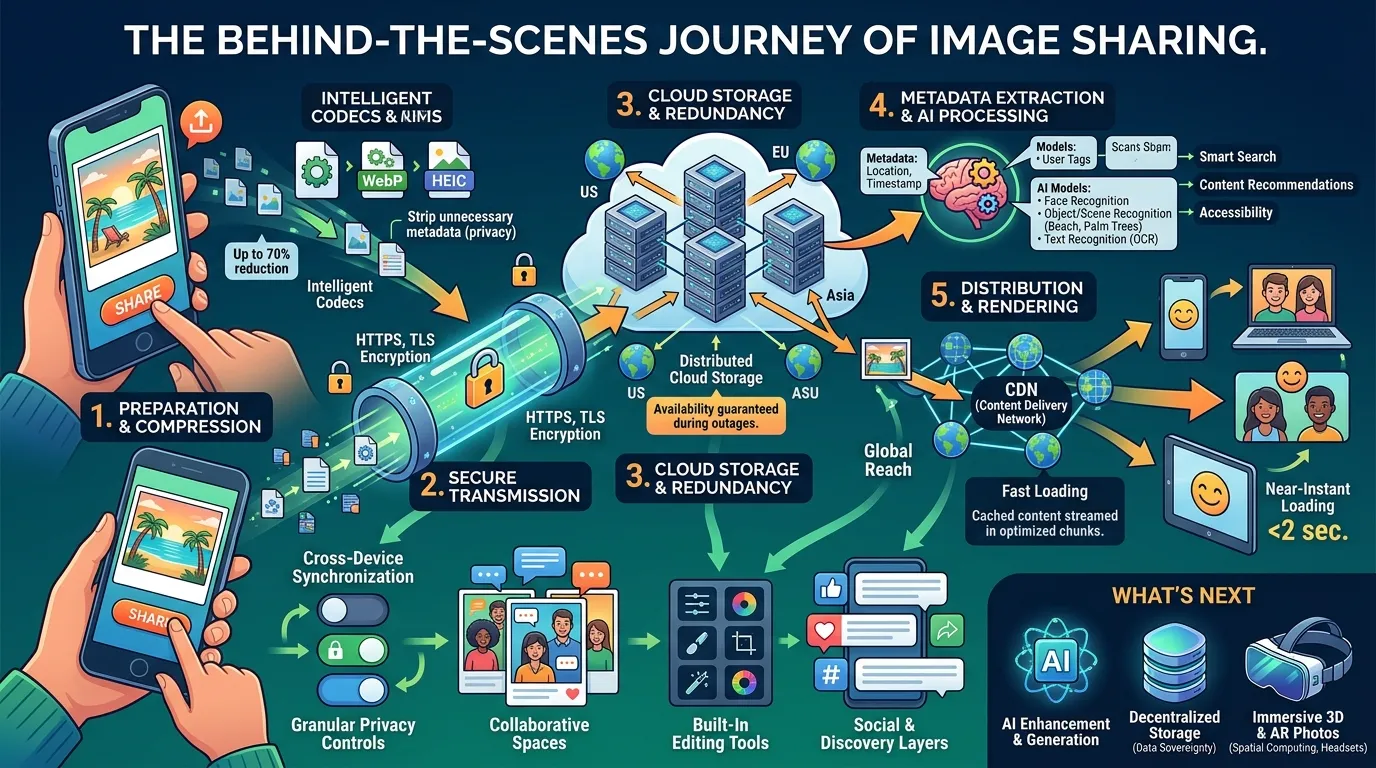
When you select a photo and tap “share,” a surprisingly complex technical chain kicks into motion. Here’s what happens step by step:
1. Preparation & Compression: The app first reads the image file from your device’s gallery or camera roll. To optimize bandwidth and storage, it typically runs the file through a compression algorithm. Modern apps use intelligent codecs (like WebP or HEIC) that reduce file size by up to 70% while preserving visual quality. The app also checks format compatibility and strips unnecessary device-specific metadata for privacy.
2. Secure Transmission: Once prepped, the image is encrypted and transmitted over the internet using secure protocols like HTTPS and TLS. This ensures that your photo cannot be intercepted or altered during transit.
3. Cloud Storage & Redundancy: The encrypted file lands on the app’s cloud infrastructure. Rather than storing your image on a single server, reputable platforms use distributed cloud storage across multiple data centers. Your photo is automatically duplicated across geographically separated locations, guaranteeing availability even if one server experiences an outage.
4. Metadata Extraction & AI Processing: Simultaneously, the platform’s backend extracts and indexes metadata. This includes technical data (resolution, timestamp, geolocation) and user-added information (captions, tags, album assignments). Many apps now run lightweight AI models at this stage to automatically recognize faces, objects, scenes, or text. This powers smart search, content recommendations, and accessibility features like auto-generated alt text.
5. Distribution & Rendering: Finally, the app updates its database to reflect your new upload and applies your chosen privacy settings. When someone views your image, their request is routed to the nearest Content Delivery Network (CDN) node. The CDN caches and streams the image in optimized chunks, ensuring near-instant loading regardless of the viewer’s location or device. All of this happens in under two seconds.
Key Features That Power the Experience
What separates a basic file storage service from a true image sharing app is its deliberate focus on user experience and functionality. Modern platforms prioritize:
- Cross-Device Synchronization: Seamless access across smartphones, tablets, and desktops.
- Granular Privacy Controls: Options for public sharing, private links, password protection, or audience-specific visibility.
- Collaborative Spaces: Shared albums where multiple users can upload, comment, and curate together.
- Built-In Editing Tools: Quick adjustments for cropping, filtering, color grading, and text overlays before sharing.
- Social & Discovery Layers: Likes, comments, reposts, hashtags, and algorithmic feeds that turn static images into interactive conversations.
Why Do People Rely on Image Sharing Apps?
The appeal extends far beyond convenience. For everyday users, these apps solve the universal problem of limited device storage while offering automatic backup against phone loss, damage, or accidental deletion. Creators, marketers, and small businesses leverage them for portfolio showcasing, brand building, and audience engagement. Remote teams use shared visual libraries for product development, campaign planning, and asynchronous feedback. In short, image sharing apps transform isolated digital files into living, discoverable assets that bridge personal memories and professional workflows.
What’s Next for Image Sharing?
The landscape is evolving rapidly, driven by advancements in artificial intelligence, privacy architecture, and immersive media. AI is already enabling smarter organization, automatic enhancement, and generative editing tools. Meanwhile, growing demand for data sovereignty is pushing developers toward end-to-end encryption, decentralized storage models, and transparent user consent frameworks. We’re also seeing early integration of spatial computing and 3D image formats, which will allow users to share depth-aware photos compatible with AR headsets and next-generation displays. As visual communication continues to dominate digital interaction, image sharing platforms will only become more intelligent, secure, and seamlessly woven into our daily workflows.
Conclusion
Image sharing apps are far more than digital photo albums—they’re sophisticated technological pipelines that turn static pixels into shared experiences. By combining cloud infrastructure, intelligent processing, and user-centric design, they’ve fundamentally changed how we capture, store, and connect through visuals. Whether you’re backing up family memories, building a creative brand, or simply scrolling through a curated feed, understanding how these apps work gives you a deeper appreciation for the invisible engineering behind every tap, swipe, and shared moment. As technology advances, one thing remains certain: the way we share images will keep getting smarter, faster, and more personal. What will you share next?